The Hidden Mechanisms of Fiber: Four Digestive Truths You Need to Know
Rebuilding the true value of fiber—from gut motility to brain health—through a scientific lens.
Dietary fiber is often praised as the digestive system’s “cleaner” or “gold standard.” We’re told to eat more plant-based, fiber-rich foods to stay regular and healthy. But most people only understand fiber on a surface level and don’t fully grasp how it works—or when it can actually backfire.
Every year, millions of Americans struggle with IBS, constipation, and other digestive disorders. Understanding fiber’s complex physiological role is essential for long-term balance and digestive health.
Below are four often-overlooked scientific truths about how fiber actually works inside your digestive system.
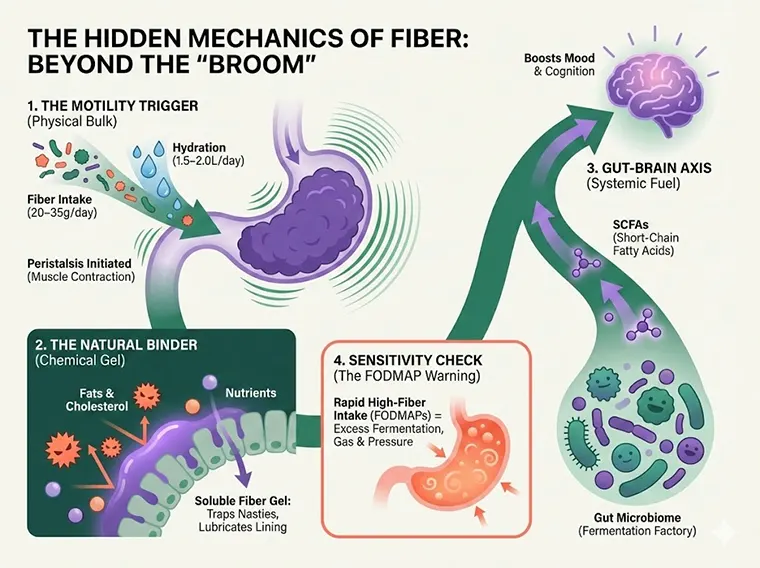
1. Fiber Isn’t a “Broom”—It Creates the Bulk That Triggers Gut Motility
Fiber’s most important role isn’t “sweeping” your intestines. Its real function is to provide the bulk that forms stool.
Adequate dietary fiber and hydration are the foundation for proper stool volume. This bulk is what triggers peristalsis, the wave-like muscle contractions in the colon that move stool forward.
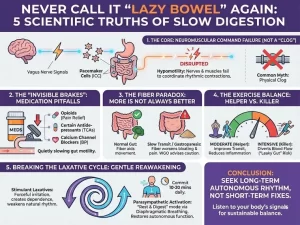
Without enough bulk, peristalsis can’t start, leading to stool retention and constipation.
Experts recommend 20–35 grams of fiber per day and 1.5–2.0 liters of water daily for people with chronic constipation.
2. Soluble Fiber Acts Like a Natural Binder Inside Your Body
Soluble fibers such as guar gum and pectin play a unique chemical role during digestion.
Guar gum, rich in polysaccharides, forms a gel when mixed with water. This gel:
- Expands in the stomach to increase fullness
- Helps reduce appetite
- Traps fats and cholesterol to lower their absorption
- Lubricates the colon lining for easier elimination
This gel-like texture supports smooth movement through the digestive tract.
3. Fiber’s Ultimate Goal: Supporting the Gut-Brain Axis to Improve Mood & Cognition
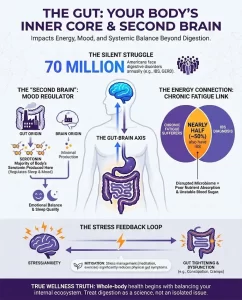
Fiber becomes powerful when fermented by gut microbes, producing short-chain fatty acids (SCFAs).
A diet rich in fruits, vegetables, and whole grains increases beneficial bacteria and boosts SCFA production.
Your gut microbiome—which includes trillions of bacteria, fungi, and viruses—supports:
- Nutrient processing
- Energy production
- Toxin elimination
- Emotional well-being
Probiotics like Lactobacillus and Bifidobacterium can strengthen the gut barrier, regulate metabolism, and even improve cognitive function.
4. Truth: High-Fiber Vegetables Can Cause Bloating & Cramping
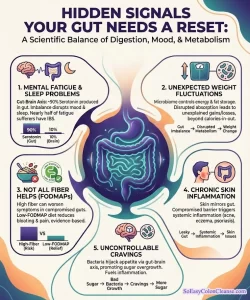
For people with digestive sensitivity—especially those with IBS—increasing fiber too quickly can make symptoms worse.
This is often due to FODMAPs, a group of poorly absorbed short-chain carbohydrates.
When these carbs reach the colon, bacteria ferment them, producing:
- Excess gas
- Water
- Pressure inside the intestinal wall
This leads to bloating, pain, and cramping.
Sometimes temporarily reducing high-fiber foods like beans, onions, and certain fruits can reduce symptoms.
When Science Meets Real Life: Fiber Management Isn’t Easy
Modern life moves fast. Even if we understand the science, precisely managing fiber types and amounts—and applying strict elimination diets—is difficult.
There’s a large gap between knowing what to do and actually doing it effectively.
The So Easy 3-Day Colon Cleanse offers a practical solution to bridge that gap.
This system uses a unique palm fiber not found in other products. Its mechanism:
- Lubricates the inner colon wall
- Creates a smooth “sliding path”
- Helps accumulated waste, including mucus buildup, pass comfortably
Unlike harsh cleanses that cause bloating or cramping, So Easy focuses on lubrication plus adequate fiber bulk to promote natural peristalsis and gentle elimination.
The formula also includes guar gum to provide necessary stool volume.
The goal: a complete, comfortable cleanse in just three days, helping you reset your digestive system efficiently.
Building Long-Term Digestive Balance
Achieving lasting digestive health takes more than “eat more vegetables.” It requires understanding the micro-level mechanics of your body and adjusting continually.
By learning how fiber creates bulk, provides lubrication, and feeds your gut microbiome, you can move beyond generic advice and build a strong, lasting digestive ecosystem.
Now that you understand fiber’s real operating system, you can make informed, science-based decisions instead of following trends blindly.
Learn how the So Easy Program uses unique palm fiber to help you gently reset your gut and achieve a smooth, effective cleanse.
FAQ
1. Is all fiber good for digestion?
Not always. While fiber supports gut health, some people—especially those sensitive to FODMAPs—may experience bloating or cramping from certain high-fiber foods.
2. How much fiber should I eat per day?
Most adults need 20–35 grams of fiber daily, along with plenty of water to support stool bulk and movement.
3. Can fiber improve mood and brain function?
Yes. Fiber feeds beneficial gut bacteria that produce SCFAs, which influence the gut-brain axis, improving mood, cognition, and metabolic function.
4. What makes the So Easy 3-Day Colon Cleanse different?
Its unique palm fiber provides lubrication while preventing bloating, supporting natural elimination without discomfort—unlike many harsh or dehydrating cleanses.