Why Gut Health Affects Your Energy, Mood, and Digestion?
Rebooting Your Inner Core: The Science Behind Better Energy, Mood, and Digestion
Your gut does far more than manage bowel movements — it plays a major role in your energy levels, sleep quality, and emotional balance.
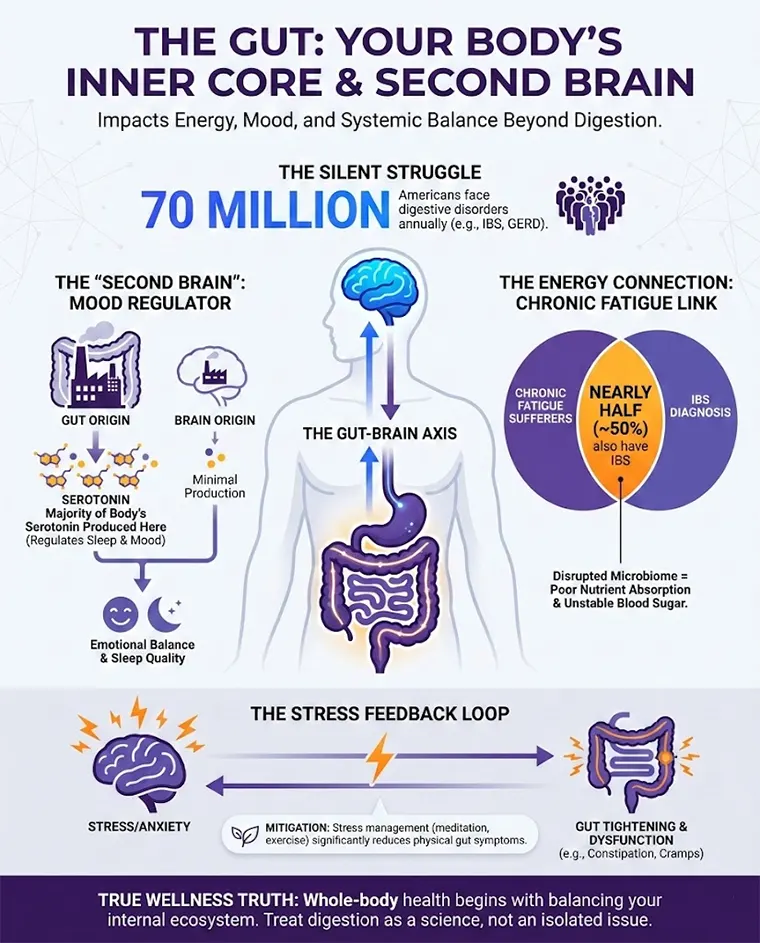
Every year, nearly 70 million Americans struggle with digestive issues such as IBS (Irritable Bowel Syndrome) and GERD (Gastroesophageal Reflux Disease). The digestive system isn’t just responsible for breaking down food and removing waste — it’s a highly complex ecosystem that deeply influences whole-body health.
While we often focus on surface-level symptoms like bloating, stomach pain, or constipation, we tend to overlook the deeper chain reactions triggered by gut dysfunction: chronic fatigue, low mood, and even impaired cognitive function.
Real health begins with understanding — and carefully supporting — this inner ecosystem. Below are four science-backed truths about gut health that are often ignored but essential for full-body balance.
Your Gut Is Your “Second Brain”: The Hidden Engine Behind Mood and Sleep
If your mood or sleep feels off, the real issue may begin in your gut.
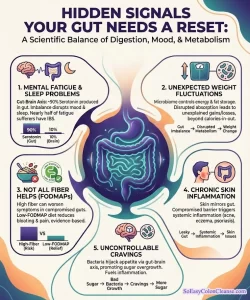
Most of the body’s serotonin — the key chemical that regulates mood and sleep — is produced in the gut. When the gut microbiome is imbalanced or inflamed, serotonin production suffers. This can lead to insomnia, poor sleep quality, and eventually fatigue.
This gut–nervous system relationship helps explain why gut inflammation is strongly linked to anxiety, depression, and other emotional changes.
Where Energy Really Comes From: The Warning Signs of Poor Nutrient Absorption & Blood Sugar Imbalance
When your gut isn’t healthy, it affects more than digestion. It disrupts your ability to:
- absorb essential nutrients
- regulate blood sugar
- store and burn fat properly
A balanced gut microbiome helps your body process food and convert it into energy. But when the microbiome is off, nutrient absorption drops and blood sugar becomes unstable — contributing to unexpected weight gain or loss.
Studies also show that nearly half of people with chronic fatigue also have IBS, highlighting how closely gut function is tied to energy levels.
The “More Fiber” Myth: Why You Must Identify Hidden Food Intolerances
“Just eat more veggies” is not a cure-all — especially for people with IBS.
Some foods can actually worsen bloating and cramping. Many intolerances stem from poor bacterial diversity in the gut.
For example, FODMAPs (Fermentable Oligosaccharides, Disaccharides, Monosaccharides, and Polyols) are short-chain carbs that the small intestine struggles to absorb. When they reach the colon, gut bacteria quickly ferment them, producing gas and drawing in water — causing:
- bloating
- cramping
- diarrhea
- nausea
Identifying and removing these trigger foods is a crucial step toward reducing symptoms.
Treat Slow Eating as Science: Regulating the Gut–Brain Axis
Digestion begins in your mouth. Chewing thoroughly and eating slowly help your body properly break down food and absorb nutrients.
But the deeper influence comes from stress and emotion.
Your gut communicates constantly with the central nervous system (CNS) through the gut–brain axis. High stress levels can cause the anal sphincter to tighten, leading to constipation. Managing stress through meditation, gentle movement, or other grounding practices can significantly reduce IBS symptoms.
Regular physical activity also supports a healthy microbiome and promotes regular bowel movements.
Modern Life Is Complex — and Your Gut Needs Consistent, Precise Maintenance
With busy schedules, it can be hard to maintain long-term gut balance through diet, exercise, and emotional care alone.
This is why many people seek a gentle, science-backed reset to help their digestive system regain stability.
The So Easy 3-Day Colon Cleanse: A Scientific and Effective Reset
The So Easy 3-Day Colon Cleanse offers a gentle, research-informed approach to clearing built-up waste.
It contains a unique palm fiber that helps:
- lubricate the inner lining of the colon
- create a smooth pathway
- support the removal of accumulated waste (including mucoid plaque)
This method provides the right amount of natural fiber to promote healthy movement without the harsh effects of stimulant laxatives. In just three days, you can support a gentle, natural reset of your digestive balance.
Understanding Your Gut Is the First Step to Long-Term Health
Your mood, energy, and physical performance all begin in the gut. True health is not a quick fix — it’s a long-term commitment to honoring and supporting your body’s inner intelligence.
So ask yourself:
Are you ready to stop treating digestive issues as isolated problems and start embracing a scientific, holistic approach that restores lasting vitality and balance?
Explore the So Easy 3-Day Colon Cleanse to learn how you can gently and efficiently reset your digestive system.
FAQ
Q1: How does my gut health affect my mood and sleep?
A: Your gut is your “second brain” because it produces over 90% of your body’s serotonin, a key chemical regulating mood and sleep. An imbalance can lead to fatigue, anxiety, and insomnia.
Q2: Why am I always tired if my gut is unhealthy?
A: An unhealthy gut impairs nutrient absorption and destabilizes blood sugar. This inefficiency means your body can’t convert food into usable energy effectively, which results in chronic fatigue.
Q3: What is the gut-brain axis?
A: The gut-brain axis is a constant, bidirectional communication system linking your digestive tract and central nervous system. Stress or emotional states can directly impact digestive function, and vice-versa.
Q4: Should I just eat more fiber if I have digestive issues?
A: Not always. For people with IBS, excessive intake of poorly absorbed fibers (like high-FODMAP foods) can worsen bloating, gas, and cramping. Personalized dietary adjustments are often necessary.